From one prototype to a financial AI
In 2023 wild became Erste Bank's external sparring partner on what would become Austria's first financial AI, working alongside the bank's own product and engineering teams, inside an institution that looks after the money of eight million customers. It started smaller than that sounds. It started with one experiment.
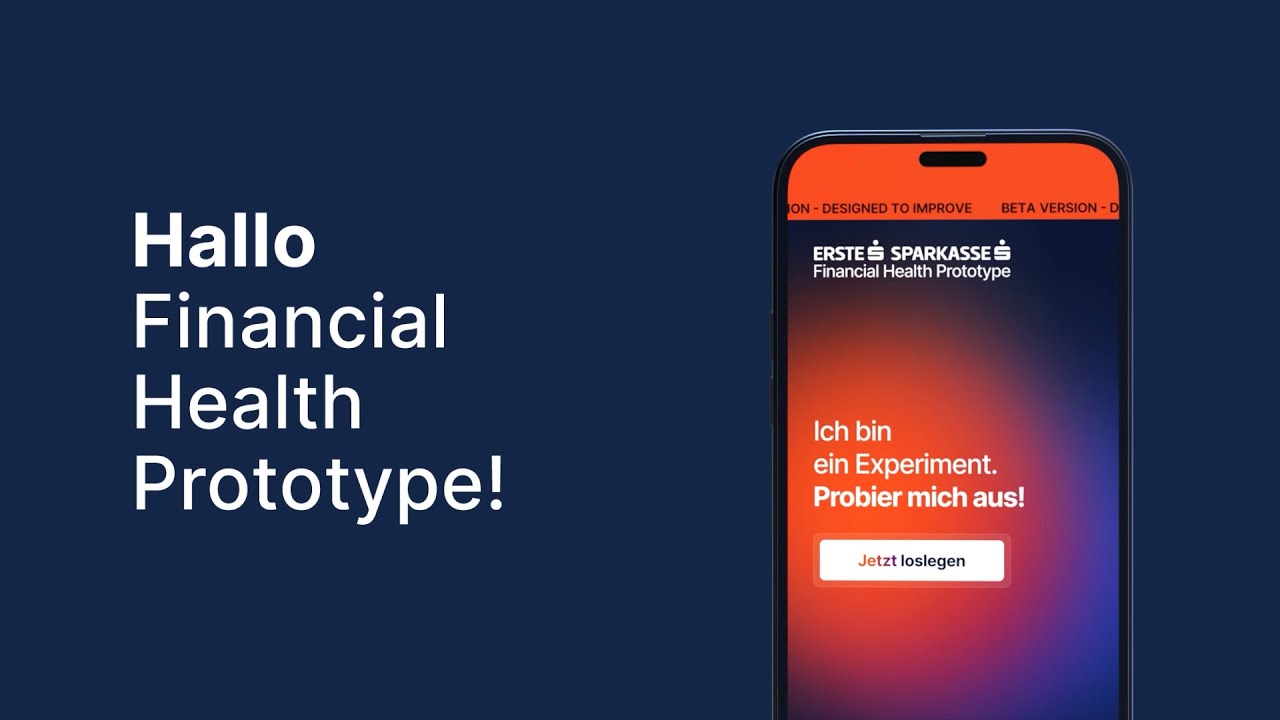
That experiment was a financial health prototype, a way for someone to see their financial situation in one place and ask questions about it in plain language. It ran on the bank's own data around financial health from the start, which is why it worked as a first step rather than staying a demo. The bank later published a video about it, which is why I can point at it here.
The data lesson came first
The prototype worked because it was grounded in real data, and that set the standard for everything after it. A model will answer a question about your finances whether or not it has the facts, so the moment we wanted the system to reach beyond financial health, every new topic had to meet the same bar the first one did. The data has to be scoped to the customer in front of it, accurate, up to date and verified, and everything we built afterwards follows from that requirement. This is where the knowledge pipeline that legal and compliance can check came from, and it is the least glamorous and most important thing we worked on.
Learning how the bank actually works
You cannot prototype your way past understanding the institution. We interviewed the people who run the processes we wanted to touch, from home financing and loans to funds and investing, and mapped the regulation that applies at each step. We worked out what it takes to bring a customer's transaction data and the bank's actual products into the model's context safely, down to the interest rates that differ by branch and location. Most of what the assistant can do well today traces back to those interviews rather than to any model capability.
Prototypes that earned the next one
From there we worked in rounds of small prototypes, each built to find out whether an idea deserved more investment. We built tools for understanding contracts better, so the fine print of a loan or an insurance product can be questioned instead of skimmed. We built versions where you talk to a product you already own, asking your account or your financing what just happened and what it costs. Some rounds went nowhere, which was the point of keeping them small.
AI experts rather than one assistant
The idea that won internal support was not a single assistant that claims to know everything. It was a set of AI experts, each scoped to a topic where the bank has real knowledge and real responsibility, from navigating subsidies and understanding contracts to real estate financing and starting to invest. We presented that direction to senior stakeholders around the bank, and it moved on to prototyping with a wider group of customers. Scoping the experts narrowed what each one is allowed to say, which made the accuracy requirement above achievable instead of aspirational.
Voice, and banking inside other AI tools
Two threads ran alongside the main product. We built voice prototypes early, and the bank's CEO demoed them live on stage, which said more about the bank's conviction than any internal deck could. And we experimented with integrating banking directly into the AI tools people already use, so the bank meets its customers where the conversation is already happening rather than only inside its own app.
The governance side of this work, the guardrails, the testing and what it takes to make a system like this auditable, is written up in AI that survives reality and in the whitepaper we published at wild. If you're working on something similar and want the parts that don't fit a public page, ask me.